
Every creator knows the feeling: you spend days scripting, filming, and editing a video you’re passionate about, only to see it flatline with a handful of views. It’s discouraging, and it’s the number one reason creators burn out.
The problem usually isn’t the quality of the video: it’s the idea itself. Most creators start with what they feel like making, hoping an audience will appear. This is a recipe for slow growth and frustration.
Successful channels operate differently. They don’t guess what people want to watch: they use data to find out. They treat idea generation not as a moment of creative inspiration, but as a systematic process of discovery. They find topics with proven demand, analyze why those topics resonate with viewers, and then apply their unique creative spin.
This shift in mindset, from passion-first to demand-first, is the single biggest change a creator can make to build a channel that grows predictably. You don’t have to abandon your creative interests, but success is all about finding the intersection between what you love to make and what a specific audience is actively searching for.
Why Most YouTube Channel Ideas Fail
Before building a system that works, it’s important to understand the common traps that lead to stagnant channels. Most failed YouTube channel ideas fall into a few predictable categories. They are often born from assumptions rather than evidence, leading to a fundamental mismatch between the content and the audience.
The Passion Project Problem
This is the most common pitfall: creating content solely based on your personal interests without validating if anyone else is looking for it. While your passion is essential for long-term consistency, it can’t be the only ingredient. A video about the intricate history of a niche video game might be fascinating to you, but if only 50 people are searching for it, the video’s growth potential is capped from the start.
The Copycat Mistake
Seeing a popular video and creating a nearly identical version is a strategy of diminishing returns. By the time you copy it, the trend may have already peaked, and you’re competing directly with a more established creator. The key is to deconstruct why it was successful: was it the format, the angle, or the emotional hook? Our guide on YouTube Competitor Analysis shows how to borrow patterns, not just topics.
The “No Niche” Dilemma
If your last three videos were a travel vlog, a cooking tutorial, and a tech review, you don’t have a channel: you have a random collection of videos. Without a clear focus, you can’t build a loyal audience because viewers don’t know what to expect. A focused channel builds topical authority, which is a strong signal to the YouTube Algorithm.
The Demand-First Framework: Where to Find Ideas
Great YouTube channel ideas aren’t invented: they’re discovered. You can find them by looking at data sources that reflect real viewer behavior. This process replaces guesswork with a system for identifying topics with a built-in audience.
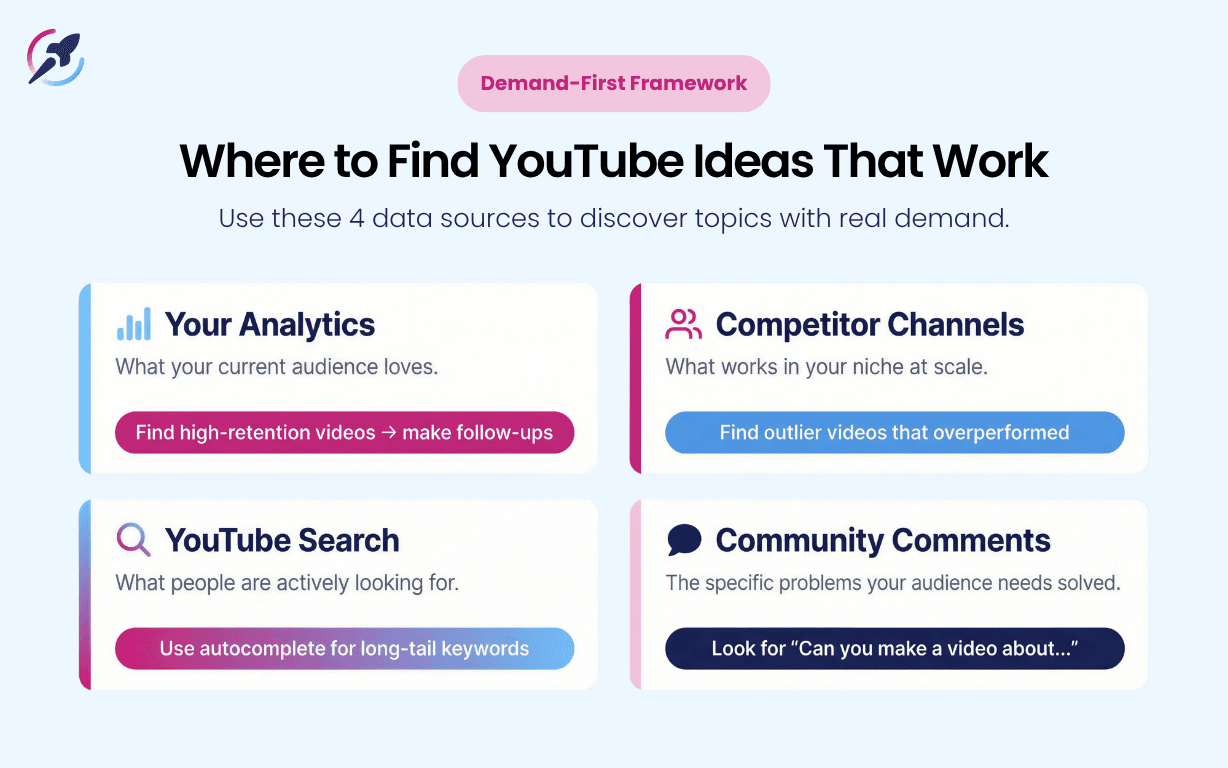
| Idea Source | What It Tells You | Actionable Step |
|---|---|---|
| Your Analytics | What your current audience loves. | Find videos with high audience retention and make follow-ups. |
| Competitor Channels | What works in your niche at scale. | Look for a competitor’s outlier video that dramatically overperformed their average. |
| YouTube Search | What people are actively looking for. | Use the search bar’s autocomplete to find long-tail keywords and questions. |
| Community Comments | The specific problems your audience needs solved. | Look for questions in your comments or on competitor videos that start with “Can you make a video about…” |
5 Proven Formats for Any Niche
Once you have a topic with proven demand, you need a format to structure it. These five formats are endlessly adaptable and tap into core viewer psychology.
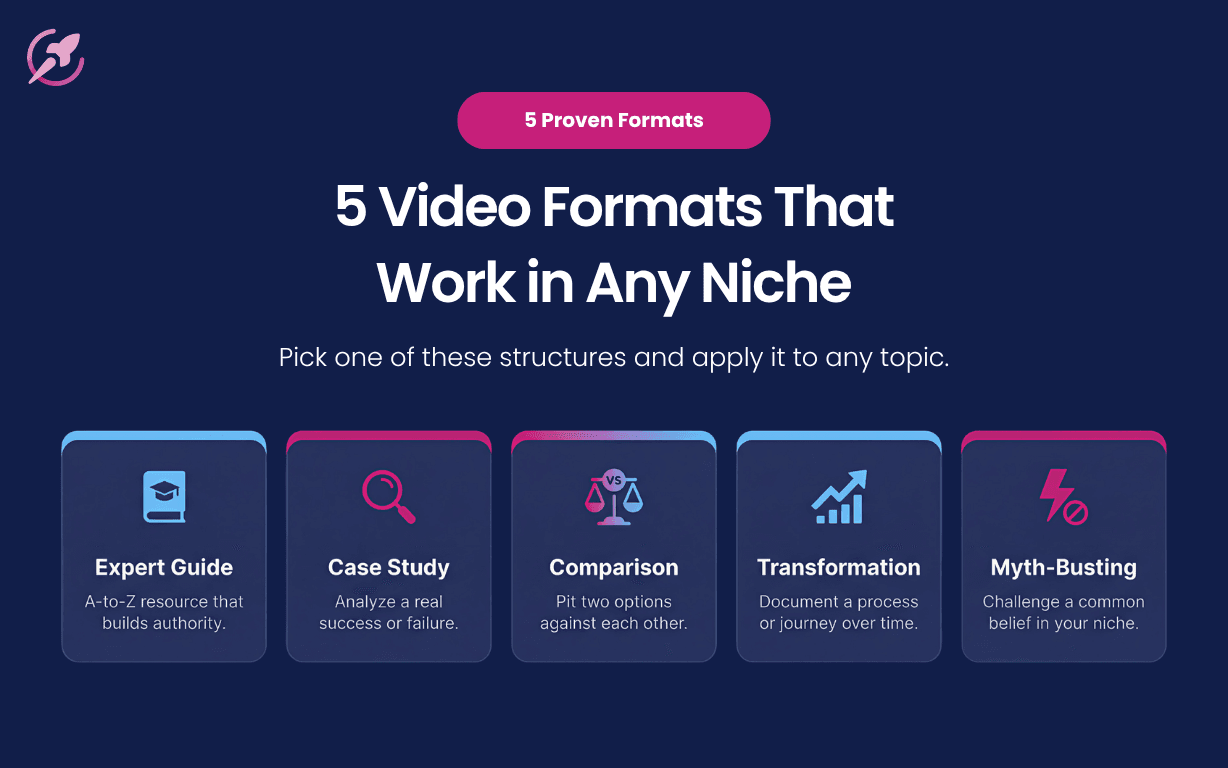
The Expert Guide
This format takes a complex topic and makes it simple. It’s a comprehensive, A-to-Z resource that positions you as an authority. Our guide to YouTube SEO is an example of this, covering everything from keywords to optimization.
The Case Study
This involves analyzing a specific example of success or failure. It could be “Why MrBeast’s Latest Video Worked” or “The Mistake That Cost This Channel 90% of its Views.” It’s educational and provides concrete lessons.
The Comparison
This format pits two things against each other: “iPhone vs. Android” or “Budget Mics vs. Pro Mics.” It helps viewers make a decision and is highly searchable.
The Transformation Journey
This format documents a process over time: “I Learned to Code in 30 Days” or “My 1-Year Body Transformation.” It creates a natural story arc that keeps viewers hooked because they want to see the final result.
The Myth-Busting Takedown
This format challenges a common belief in your niche: “Why Cardio Isn’t the Best Way to Lose Weight” or “The Investing Advice That’s Secretly Making You Poorer.” It’s contrarian and grabs attention.
From Idea to Thriving Channel
Finding a great YouTube channel idea is the first step. The next is committing to a content strategy that builds momentum over time.
Don’t just think about your next video: think about your next 20 videos. A successful channel isn’t built on one viral hit, but on a consistent body of work that serves a specific audience. Once you have your niche and format, the focus shifts to execution: creating compelling packaging with your titles and thumbnails, and keeping viewers engaged from one video to the next. That consistency is what turns a good idea into a real channel.
The ChannelBoost platform is designed for this. You can track your performance, analyze your audience, and use the Idea Generation tool to find validated topics, turning this entire process into a simple, repeatable workflow.
If you’re ready to move from idea to execution, get started with ChannelBoost to track your performance, analyze your audience, and find the insights you need to grow faster.